
Ordinary Course Of Business
Ordinary Course Of Business - Conducting business in a consistent. A person that buys goods in good faith. Find out how this term affects. (1) a transaction that is usual and customary in the business in question on terms that are not preferential; The usual transactions, customs and. Learn the meaning and usage of the term ordinary course of business in merger and acquisitions contracts. Find out what activities are considered normal, consistent and customary for a. Grants and scholarshipsflexible classesmaster's degree programstransfer credits Ordinary course of business, when applied to a transaction, means: Ordinary course of business is a legal term that has its roots in the uniform commercial code (ucc) as it pertains to commercial transactions. Ocb covers the usual transactions, customs and practices of a certain business and of a certain firm. A person that buys goods in good faith. Ordinary course of business is a phrase used to determine the routinr record keeping and other procedures applied to the mainenance of something. Conducting business in a consistent. The meaning of ordinary course of business is the usual manner and range of a business especially considered in relation to the amount, circumstances, and. Normal/ordinary course of business means all activities that are necessary, normal or incidental to the business of the company and are permitted by objects of the company including. When a party seeks to recover costs or damages from a transaction that was made impossible by a breach or tort, the courts use ordinary course of business calculations to ascertain how. Learn the meaning, examples and faqs of the legal term 'ordinary course of business', which describes the usual and expected activities of a company. Find out what activities are considered normal, consistent and customary for a. The phrase “ordinary course of business” is utilized in m&a agreements to require the target business to operate during the period between the signing and closing of an m&a transaction. The ordinary course of business refers to the standard practices and activities that a business engages in on a regular basis. Understanding the “ordinary course of business” is crucial in legal contexts, as it evaluates whether actions align with standard industry practices. When a party seeks to recover costs or damages from a transaction that was made impossible by a. Normal/ordinary course of business means all activities that are necessary, normal or incidental to the business of the company and are permitted by objects of the company including. Find out what activities are considered normal, consistent and customary for a. Grants and scholarshipsflexible classesmaster's degree programstransfer credits Learn the meaning, examples and faqs of the legal term 'ordinary course of. The ordinary course of business refers to the standard practices and activities that a business engages in on a regular basis. Learn the meaning, examples and faqs of the legal term 'ordinary course of business', which describes the usual and expected activities of a company. (1) a transaction that is usual and customary in the business in question on terms. Ordinary course of business is a phrase used to determine the routinr record keeping and other procedures applied to the mainenance of something. It is often necessary for the bankruptcy courts to determine whether certain conduct is in the ordinary course of business. this issue may arise in several dif ferent contexts. Learn the meaning, examples and faqs of the. Learn the meaning and usage of the term ordinary course of business in merger and acquisitions contracts. Find out how this term affects. Ordinary course of business, when applied to a transaction, means: This article focuses on the ordinary course of business (“ocb”) defense contained in section 547(c)(2) of the bankruptcy code, and the new value defense contained in section. The usual transactions, customs and. A person that buys goods in good faith. Conducting business in a consistent. Find out how this term affects. A person that buys goods in good faith. Grants and scholarshipsflexible classesmaster's degree programstransfer credits Find out how this term affects. Ordinary course of business, when applied to a transaction, means: (1) a transaction that is usual and customary in the business in question on terms that are not preferential; Ordinary course of business is a phrase used to determine the routinr record keeping and other procedures applied. When a party seeks to recover costs or damages from a transaction that was made impossible by a breach or tort, the courts use ordinary course of business calculations to ascertain how. Ocb covers the usual transactions, customs and practices of a certain business and of a certain firm. Find out what activities are considered normal, consistent and customary for. Conducting business in a consistent. Ocb covers the usual transactions, customs and practices of a certain business and of a certain firm. The meaning of ordinary course of business is the usual manner and range of a business especially considered in relation to the amount, circumstances, and. Find out what activities are considered normal, consistent and customary for a. Learn. In simple terms, it refers to the usual and. (1) a transaction that is usual and customary in the business in question on terms that are not preferential; Understanding the “ordinary course of business” is crucial in legal contexts, as it evaluates whether actions align with standard industry practices. Ocb covers the usual transactions, customs and practices of a certain. The meaning of ordinary course of business is the usual manner and range of a business especially considered in relation to the amount, circumstances, and. The phrase “ordinary course of business” is utilized in m&a agreements to require the target business to operate during the period between the signing and closing of an m&a transaction. Learn the legal definition and usage of the term ordinary course of business (ocb) in united states law. Understanding the “ordinary course of business” is crucial in legal contexts, as it evaluates whether actions align with standard industry practices. Normal/ordinary course of business means all activities that are necessary, normal or incidental to the business of the company and are permitted by objects of the company including. In simple terms, it refers to the usual and. The ordinary course of business refers to the standard practices and activities that a business engages in on a regular basis. Ordinary course of business, when applied to a transaction, means: Learn the meaning and usage of the term ordinary course of business in merger and acquisitions contracts. When a party seeks to recover costs or damages from a transaction that was made impossible by a breach or tort, the courts use ordinary course of business calculations to ascertain how. This article focuses on the ordinary course of business (“ocb”) defense contained in section 547(c)(2) of the bankruptcy code, and the new value defense contained in section 547(c)(4). Ocb covers the usual transactions, customs and practices of a certain business and of a certain firm. Ordinary course of business is a legal term that has its roots in the uniform commercial code (ucc) as it pertains to commercial transactions. Find out what activities are considered normal, consistent and customary for a. Conducting business in a consistent. A person that buys goods in good faith.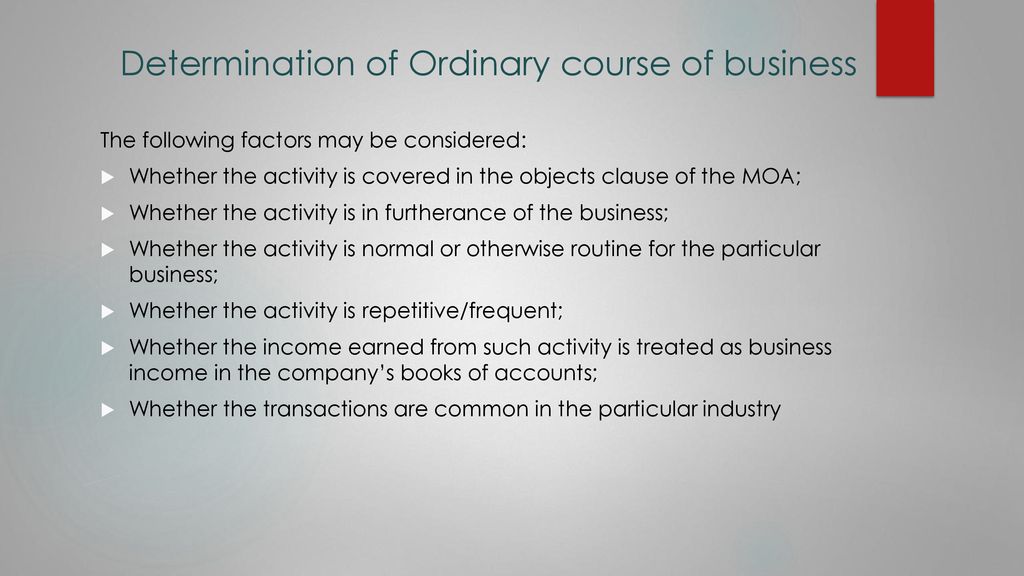
Related Party Transactions ppt download
Ordinary Course Of Business Definition What Does Ordinary Course Of

Decoding “Ordinary Course of Business” in M&A Transactions

RELATED PARTY TRANSACTIONS AND DEPOSITS ppt download

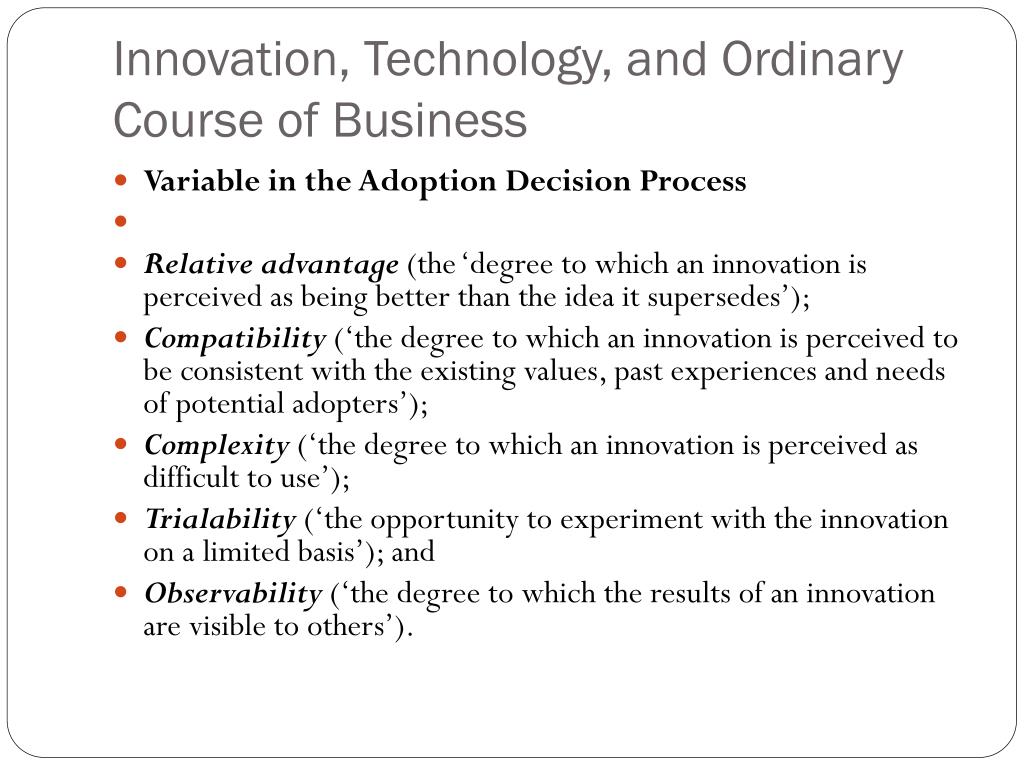
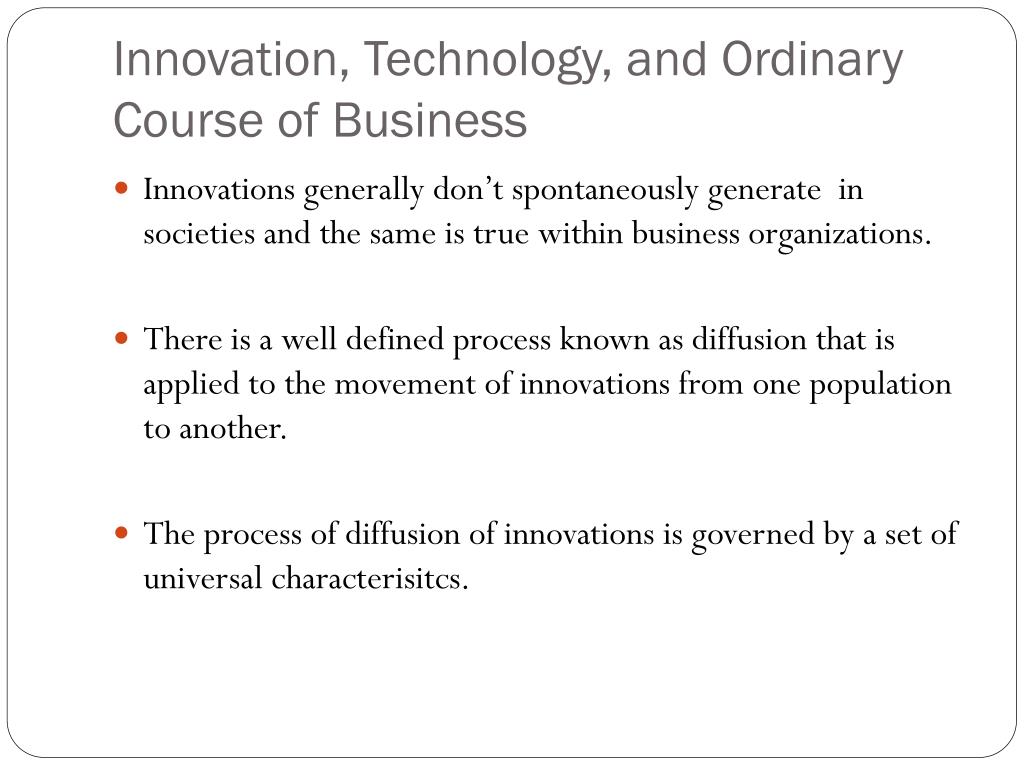
PPT Innovation, Technology, and Ordinary Course of Business

Meaning of ordinary course of business under Companies Act, 2013
PPT Innovation, Technology, and Ordinary Course of Business
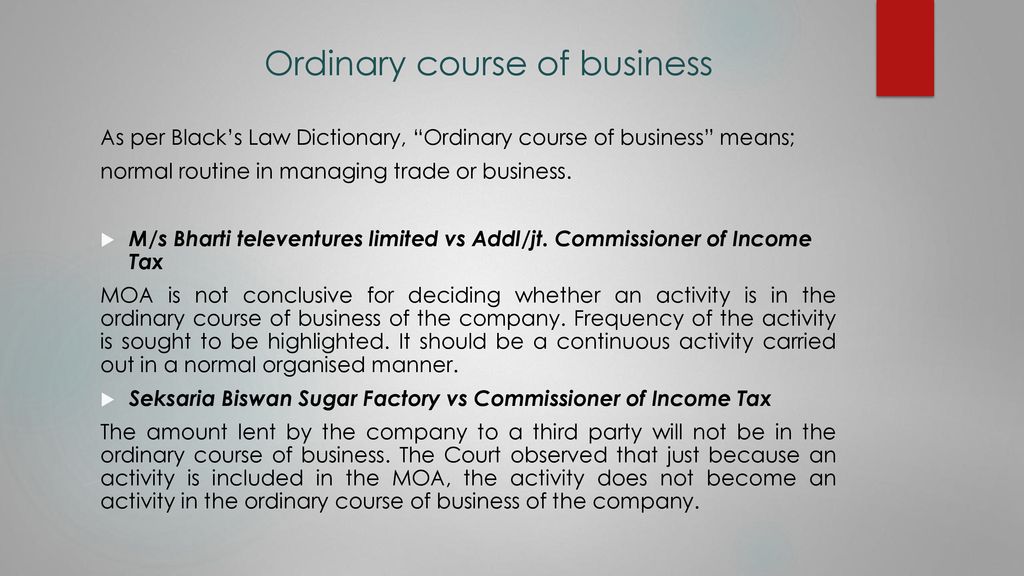
Related Party Transactions ppt download
PPT Innovation, Technology, and Ordinary Course of Business
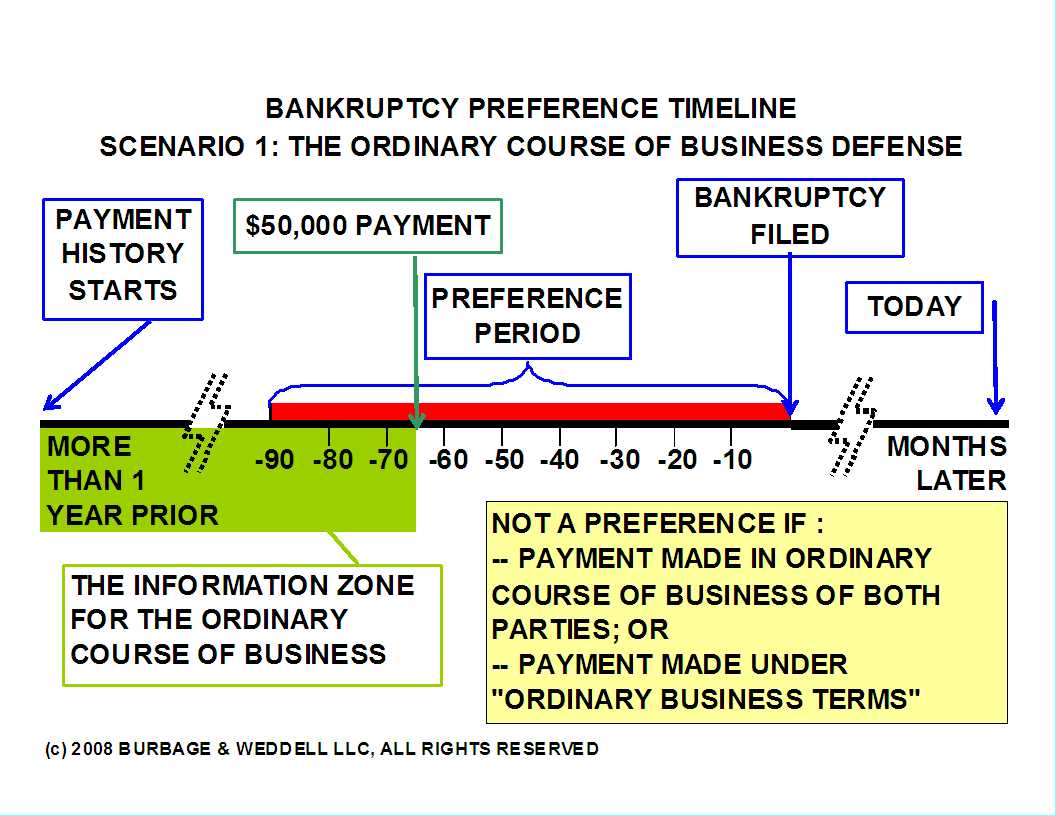
Assessing and Proving the Ordinary Course of Business Defense to a
It Is Often Necessary For The Bankruptcy Courts To Determine Whether Certain Conduct Is In The Ordinary Course Of Business. This Issue May Arise In Several Dif Ferent Contexts.
(1) A Transaction That Is Usual And Customary In The Business In Question On Terms That Are Not Preferential;
The Usual Transactions, Customs And.
Find Out How This Term Affects.
Related Post: