
Taste And Smell Crash Course A&P #16
Taste And Smell Crash Course A&P #16 - Study with quizlet and memorize flashcards containing terms like ansomnia, gas, gustatory cells and more. Sensory cells translating chemical, electromagnetic, and mechanical stimuli into action potentials that our nervous system can make sense of. Study with quizlet and memorize flashcards containing terms like gustation, olfaction, photoreceptor and more. Hank resists the urge to devour a slice of pizza so that he can walk you through the way we. View crash course 16.pdf from ba anatomy at basalt high school. Study with quizlet and memorize flashcards. It all boils down to one thing: Crash course a&p #16 video. This worksheet is used to follow along with the crash course taste & smell: Study with quizlet and memorize flashcards containing terms like anosmia, transduction, photoreceptors and more. Sensory cells translating chemical, electromagnetic, and mechanical stimuli into action potentials that our nervous system can make sense of. What happens after a taste is registered in your gustatory cortex? Crash course anatomy & physiology #16 Enzymes are released in your saliva and stomach. This crash course a&p #16: In 47 episodes, hank green will teach you anatomy and physiology! View taste and smell crash course 16.doc from bsc 1 at tallahassee community college. It all boils down to one thing: This worksheet is used to follow along with the crash course taste & smell: In sensation, the transforming of stimulus energies, such as sights, sounds, and smells, into neural impulses our brains can interpret. What happens after a taste is registered in your gustatory cortex? Sensory cells translating chemical, electromagnetic, and mechanical stimuli into action potentials that our nervous system can make sense of. Crash course a&p #16 video. Today we're focusing on smell (olfaction) and taste (gustation), which are chemical senses that call on chemoreceptors. Projections that make your tongue rough. Be the first to ask a question about this topic. As usual, we'll begin with a quick look at how these things. Today we're focusing on smell (olfaction) and taste (gustation), which are chemical senses that call on chemoreceptors. Enzymes are released in your saliva and stomach. 3 million resourcesratings & reviewsavailable on web & appsfree to join Study with quizlet and memorize flashcards containing terms like anosmia, transduction, photoreceptors and more. Hank resists the urge to devour a slice of pizza so that he can walk you through the way we. Name _ period_ date_ taste & smell: Join thousands of students who trust us to help them ace their exams! Study with quizlet and memorize flashcards. 3 million resourcesratings & reviewsavailable on web & appsfree to join Enzymes are released in your saliva and stomach. It all boils down to one thing: This crash course a&p #16: Crash course a&p #16 video. What happens after a taste is registered in your gustatory cortex? As usual, we'll begin with a quick look at how these things. Today we're focusing on smell (olfaction) and taste (gustation), which are chemical senses that call on chemoreceptors. Name _ period_ date_ taste & smell: 3 million resourcesratings & reviewsavailable on web & appsfree to join View taste and smell crash course 16.doc from bsc 1 at tallahassee community college. 3 million resourcesratings & reviewsavailable on web & appsfree to join Study with quizlet and memorize flashcards containing terms like gustation, olfaction, photoreceptor and more. Enzymes are released in your saliva and stomach. This worksheet is used to follow along with the crash course taste &. What happens after a taste is registered in your gustatory cortex? 3 million resourcesratings & reviewsavailable on web & appsfree to join Sensory cells translating chemical, electromagnetic, and mechanical stimuli into action potentials that our nervous system can make sense of. Crash course a&p #16 video. Join thousands of students who trust us to help them ace their exams! View crash course 16.pdf from ba anatomy at basalt high school. View taste and smell crash course 16.doc from bsc 1 at tallahassee community college. Crash course a&p #16 using the video link: In sensation, the transforming of stimulus energies, such as sights, sounds, and smells, into neural impulses our brains can interpret. As usual, we'll begin with a quick. Study with quizlet and memorize flashcards. 3 million resourcesratings & reviewsavailable on web & appsfree to join Sensory cells translating chemical, electromagnetic, and mechanical stimuli into action potentials that our nervous system can make sense of. Crash course a&p #16 using the video link: Included are a total of 20 questions and an answer key. Crash course a&p #16 video. Retina layer | photoreceptor rods. Name _ period_ date_ taste & smell: In sensation, the transforming of stimulus energies, such as sights, sounds, and smells, into neural impulses our brains can interpret. Today we're focusing on smell (olfaction) and taste (gustation), which are chemical senses that call on chemoreceptors. What happens after a taste is registered in your gustatory cortex? This crash course a&p #16: Study with quizlet and memorize flashcards containing terms like a loss. In sensation, the transforming of stimulus energies, such as sights, sounds, and smells, into neural impulses our brains can interpret. 3 million resourcesratings & reviewsavailable on web & appsfree to join As usual, we'll begin with a quick look at how these things. View taste and smell crash course 16.doc from bsc 1 at tallahassee community college. Hank resists the urge to devour a slice of pizza so that he can walk you through the way we. In 47 episodes, hank green will teach you anatomy and physiology! As usual, we'll begin with a quick look at how these things. Join thousands of students who trust us to help them ace their exams! Crash course anatomy & physiology #16 Enzymes are released in your saliva and stomach. View crash course 16.pdf from ba anatomy at basalt high school. Retina layer | photoreceptor rods. Today we're focusing on smell (olfaction) and taste (gustation), which are chemical senses that call on chemoreceptors.
Crash Course A&p 16 Taste and Smell Instructional Video for 9th

SOLUTION Taste smell crash course anatomy physiology Studypool

Senses Taste and Smell Diagram Quizlet

Taste & Smell Crash Course A&P 16 YouTube Crash course, Tasting

Special Senses Hearing, Taste, Smell ppt download
Crash Course Taste and Smell PDF Olfaction Taste
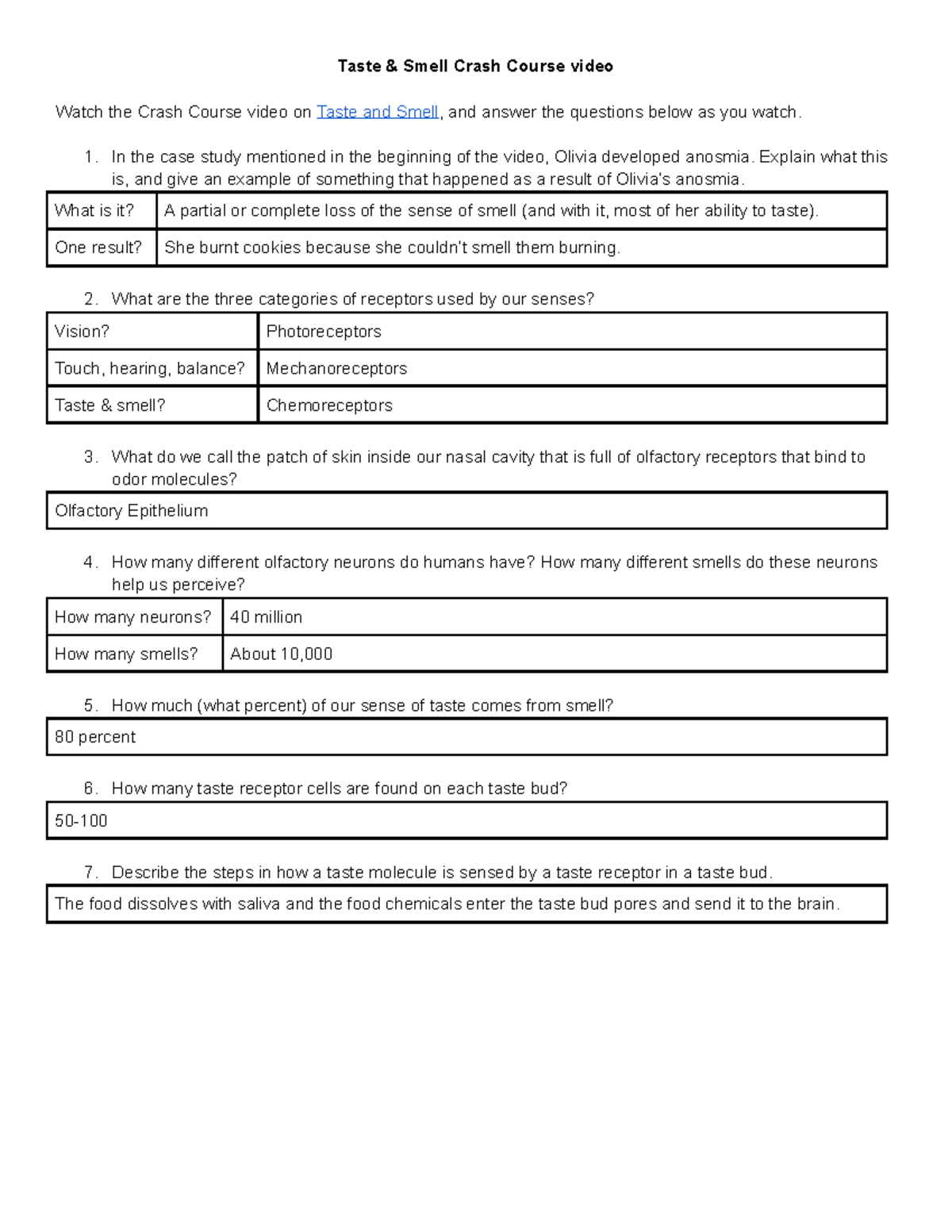
Taste Smell Crash Course video Taste & Smell Crash Course video Watch

Neuro Smell, Taste, Somatosensation, and Kinesthetic Sense MCAT
16 TpT Taste & Smell Crash Course A&P 8th Grade University Quiz

Taste & Smell Crash Course A&P 16 from Crash Course Crash course
Sensory Cells Translating Chemical, Electromagnetic, And Mechanical Stimuli Into Action Potentials That Our Nervous System Can Make Sense Of.
Included Are A Total Of 20 Questions And An Answer Key.
It All Boils Down To One Thing:
Name _ Period_ Date_ Taste & Smell:
Related Post:

