
Yes Of Course In French
Yes Of Course In French - Some expressions are formal, while others are casual. Translation in sentences, listen to pronunciation and learn grammar. Of course (general, common use). “i spilled red wine all over the rug again of course!” = “j’ai encore renversé du vin rouge sur le tapis évidemment,” ‘hope this helps! Bien sûr is how you say of course in french. Read on to find out more about how to say “yes” in french, including. Bien sûr “absolutely” in french: “d’accord” means “ok” and shows you agree or accept something. Check 'yes, of course!' translations into french. French 1, level 3, scene 5; Need to translate yes of course to french? And “no” in french is non. In fact, you can use most of the different ways to say of course in french that we’ll look at below as standalone responses, links between clauses, or sarcasm, not just bien sûr. French 1, level 3, scene 4; Look through examples of yes, of course! Yes, of course we are thinking about this communication strategy. “of course it’s you/it’s you, of course!” = “c’est toi, évidemment!” and it works well to express frustration: Translation in sentences, listen to pronunciation and learn grammar. (if you have an html5 enabled browser, you can listen to the native audio below) this is a phrase that is used in the gamesforlanguage french language game in the following scenes: In this case, both the formal and casual translations are the same because the phrase yes of course is a simple and neutral expression that can be used in both formal and casual contexts without any significant change in tone or register. (of course, i’ll help you.) bien sûr que oui! In french, the way you say yes, of course. is: (can you help me with this task?) French 1, level 4, scene 5 D’accord or ok (pronounced oké) “of course” in french: Here's how you say it. Learning different ways to express yes, of course in french can greatly enhance your ability to communicate effectively in everyday conversations. Some expressions are formal, while others are casual. ``` oui bien sûr ``` casual french: In this case, both the formal and casual translations are the same because the phrase yes of course is. ``` oui bien sûr ``` casual french: The french language has more than just “oui” to say “yes.” phrases like “bien sûr” mean “of course” and show you’re sure or certain. (can you help me with this task?) (of course, i’ll help you.) bien sûr que oui! However, as the most common expression, bien sûr is certainly the one to. French 1, level 3, scene 4; In fact, you can use most of the different ways to say of course in french that we’ll look at below as standalone responses, links between clauses, or sarcasm, not just bien sûr. Learning different ways to express yes, of course in french can greatly enhance your ability to communicate effectively in everyday conversations.. ``` oui bien sûr ``` casual french: Of course (general, common use). Yes, of course we are thinking about this communication strategy. French 1, level 4, scene 5 French 1, level 3, scene 4; Here is a quick list of ways to say “yes” in french: “of course” just happens to be such an expression that you can use to not only say yes, but also put some enthusiasm behind it. ``` oui bien sûr ``` casual french: French 1, level 4, scene 5 French 1, level 3, scene 4; Check 'yes, of course!' translations into french. However, as the most common expression, bien sûr is certainly the one to. Learn how to say, spell, and pronounce the french words for “ok,” “of course,” “yeah,” “yes,” and more with this handy guide. Bien sûr, je vais t’aider. Of course (general, common use). Translation in sentences, listen to pronunciation and learn grammar. ``` oui bien sûr ``` explanation: (can you help me with this task?) French 1, level 3, scene 5; Bien sûr is how you say of course in french. (yes, of course (he does)!) French 1, level 4, scene 5 Translation in sentences, listen to pronunciation and learn grammar. (can you help me with this task?) “d’accord” means “ok” and shows you agree or accept something. French 1, level 3, scene 5; French 1, level 3, scene 4; (can you help me with this task?) Bien sûr, je vais t’aider. (if you have an html5 enabled browser, you can listen to the native audio below) this is a phrase that is used in the gamesforlanguage french language game in the following scenes: Look through examples of yes, of course! Bien sûr, je vais t’aider. Read on to find out more about how to say “yes” in french, including. In french, the way you say yes, of course. is: French 1, level 3, scene 4; Some expressions are formal, while others are casual. French 1, level 4, scene 5 In fact, you can use most of the different ways to say of course in french that we’ll look at below as standalone responses, links between clauses, or sarcasm, not just bien sûr. Learn how to say, spell, and pronounce the french words for “ok,” “of course,” “yeah,” “yes,” and more with this handy guide. (yes, of course (he does)!) Here's how you say it. Of course (general, common use). Here is a quick list of ways to say “yes” in french: How do you say “yes” in french? However, as the most common expression, bien sûr is certainly the one to. In this case, both the formal and casual translations are the same because the phrase yes of course is a simple and neutral expression that can be used in both formal and casual contexts without any significant change in tone or register.
How to Say Of course in French Clozemaster
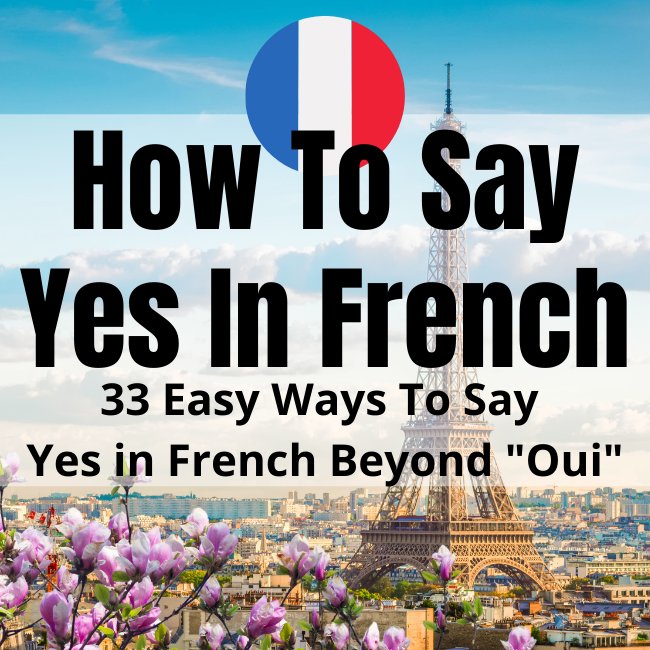
33 Ways to Say Yes in French French Learner

5 Ways to Say Yes in French wikiHow

How to say of course in French? YouTube

How to say "Of course" in French with an example! 🇫🇷 YouTube
How to Say "Yes" in French French Lessons YouTube

17 Ways to Say "Yes" in French

Ways to say yes in French French language lessons, French lessons

Learn French How to Say "Yes Of Course" in French Learn French
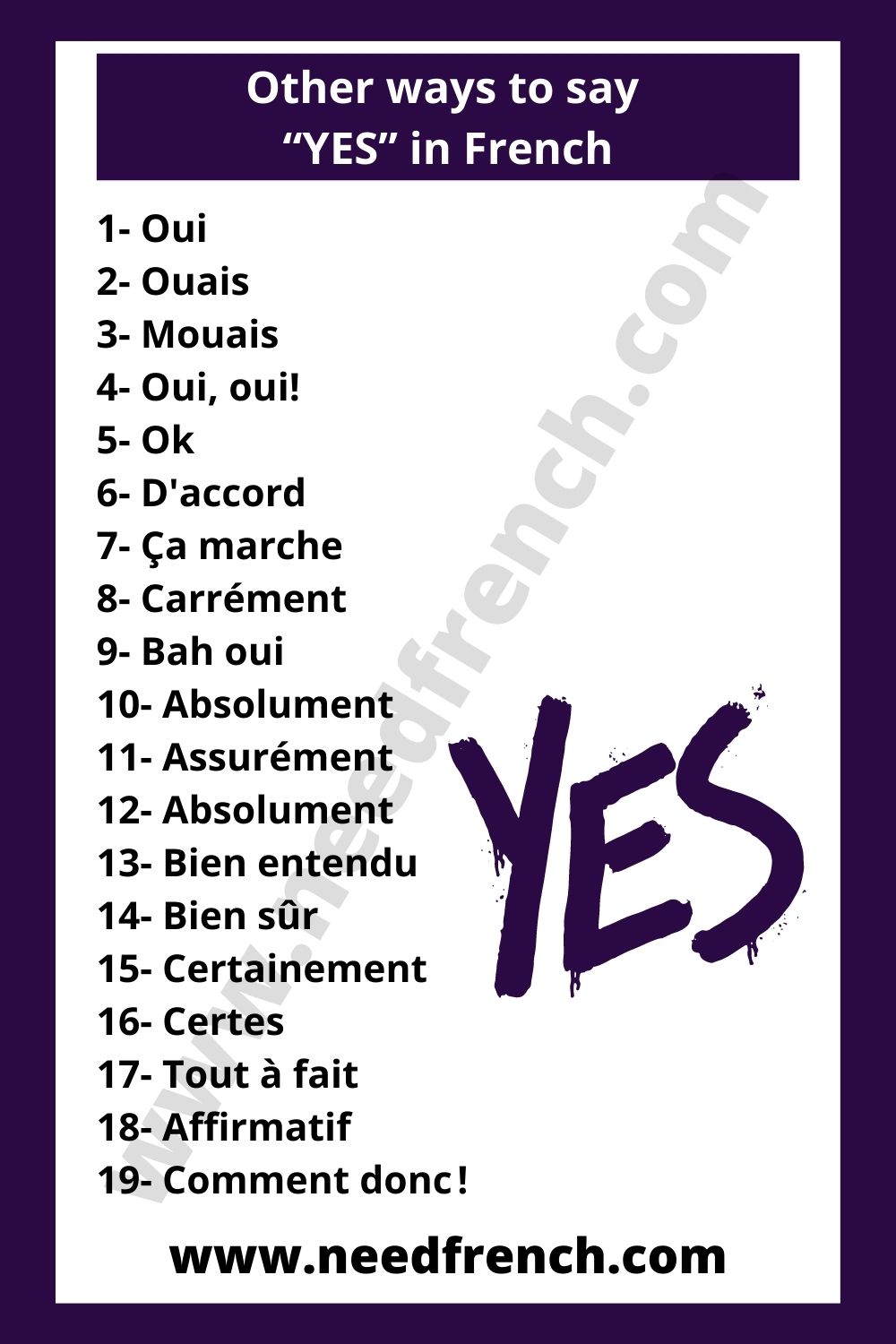
18 Other ways to say “YES” in French (Oui) NeedFrench
Check 'Yes, Of Course!' Translations Into French.
And “No” In French Is Non.
Translation In Sentences, Listen To Pronunciation And Learn Grammar.
Bien Sûr Que Oui Is A Common Way To Say “Yes, Of Course!” Or “Yes, Of Course He/She/It Does/Is!” Here Are Some Examples:
Related Post: